What a floor really costs.
Flooring pricing in New Zealand is harder to compare than it should be. This is how the numbers actually work, what the advertised rates leave out, and the pricing we run today.
The only number that matters is the installed one.
Most flooring in New Zealand is advertised at a supply-only rate: the boards, and nothing else. Installation is quoted separately and lands on the total later. The result is a rate that looks reasonable in an advertisement and grows considerably by the time a floor is actually underfoot.
We price the other way around. Every rate we publish covers both supply and installation as one figure, and it is the same figure printed on our collection pages. On our timber ranges, that combined number often lands under what others charge for the materials alone.
Supply & install pricing.
These are the rates we run today in Auckland, per square metre, supplied and installed by our own team. Every timber range carries its warranty, up to 25 years, at no extra cost.
If you are weighing quotes, put them side by side on the finished number. Ask whether an advertised rate includes installation, and if it does not, ask what installation will be before you compare anything else.
What a complete quote can add.
A metre rate covers the floor. A complete quote covers the project, and these are the lines that can appear on it.
None of them should be a surprise. Each one is listed on the quote before you commit, along with GST as its own line, so the figure you accept is the figure you pay.
Delivery
A complete quote adds delivery of the flooring to your site.
Finishing trims
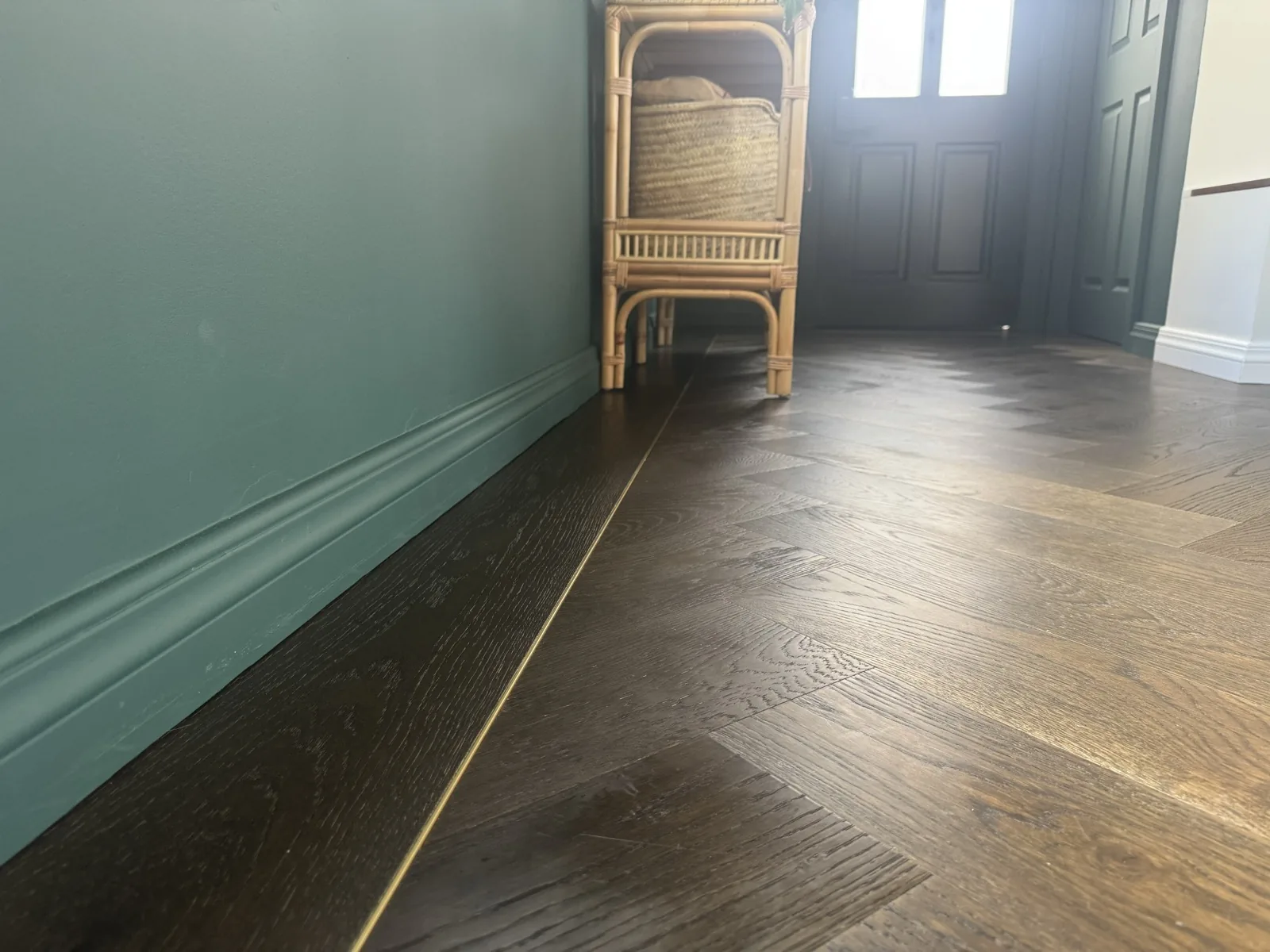
Where a new floor meets a different surface, an L Channel Bar finishes the join cleanly. Trims are added to the quote where your rooms need them.
The wastage allowance
Every measured area gains an industry standard wastage allowance before it is priced: 10% for straight plank, and 15% for herringbone, where the pattern’s angled cuts and layout balancing use more board. The allowance is not padding; in most jobs the majority or entirety of it goes into the cuts, joins and board selection that make the floor look right. It is on the quote in plain sight, not hidden in the rate.
Floor preparation
If a subfloor needs grinding or levelling, preparation is priced right on your quote: grinding at $10/m² on the raw measured area, and self levelling compound at $120 per bag, only where required, charged by actual use. You pay for exactly the preparation your floor needs, and nothing more.
What you never pay for
The waste in solid timber. We sell engineered boards only: a true oak surface over a plantation-grown core, which is a large part of why our timber rates sit where they do.
Holding the price you were quoted.
Our average lead time is two weeks, though it moves with the realities of building: an existing job can run long, and finishing it properly comes first. Stock also leaves our warehouses quickly, and shipments only arrive so often.
That is why a quoted floor is not reserved until the quote is accepted. Accepting when it suits you locks the quoted materials as yours and puts your installation dates in the calendar.
From estimate to firm quote.
Advertised rates get you an estimate. An exact number takes a measure: we visit, scan the home with LiDAR, draw the floorplan, and come back with a firm quote and a preview of your chosen floor in your own rooms.
The measure and the quote are free, with no obligation, and you can see the whole sequence carried out on a real job at Whangaparaoa Road before anyone visits your home.
Let’s start from the ground up.
Tell us about your space and we’ll come back with a plan and a price.