Engineered wood flooring, explained.
Engineered timber is the floor most New Zealand homes should be comparing first, and the one most shoppers understand least. This is the whole picture in plain language: what the boards actually are, why they behave so well here, and how to read the pricing.
What engineered actually means.
An engineered board is real oak where it counts, built onto a core designed to stay flat. On top sits a solid oak wear layer, 3 to 4mm thick on our boards, finished with an eight coat brushed, invisible lacquer. Beneath it is a multi-layer plywood core with each layer’s grain running across its neighbour’s, and a balancing backing underneath.
That cross-plied core is the whole idea. Timber naturally swells and shrinks across its grain as the seasons change. In a solid plank the entire board moves as one piece, which is where cupping, crowning and seasonal gaps come from. In an engineered board the crossed layers pull against each other, so the movement largely cancels itself out and the board stays the shape it was laid in.
Why it suits New Zealand homes.
New Zealand asks a lot of a timber floor. Humid summers, dry heated winters, and houses that swing between the two: timber moves with humidity, and the wider the swing, the harder a solid floor works against itself. The engineered core was designed for exactly this, which is why it is what we supply and install across Auckland, from villas to new builds on concrete slabs.
The slab is its own argument. Engineered boards glue directly to concrete, the way almost every modern Auckland home is built, where solid timber traditionally wants a sub-structure first. And every range we lay is rated for underfloor heating, water based or electric, with the limits published in the underfloor heating document on each range page.
The real wood question.
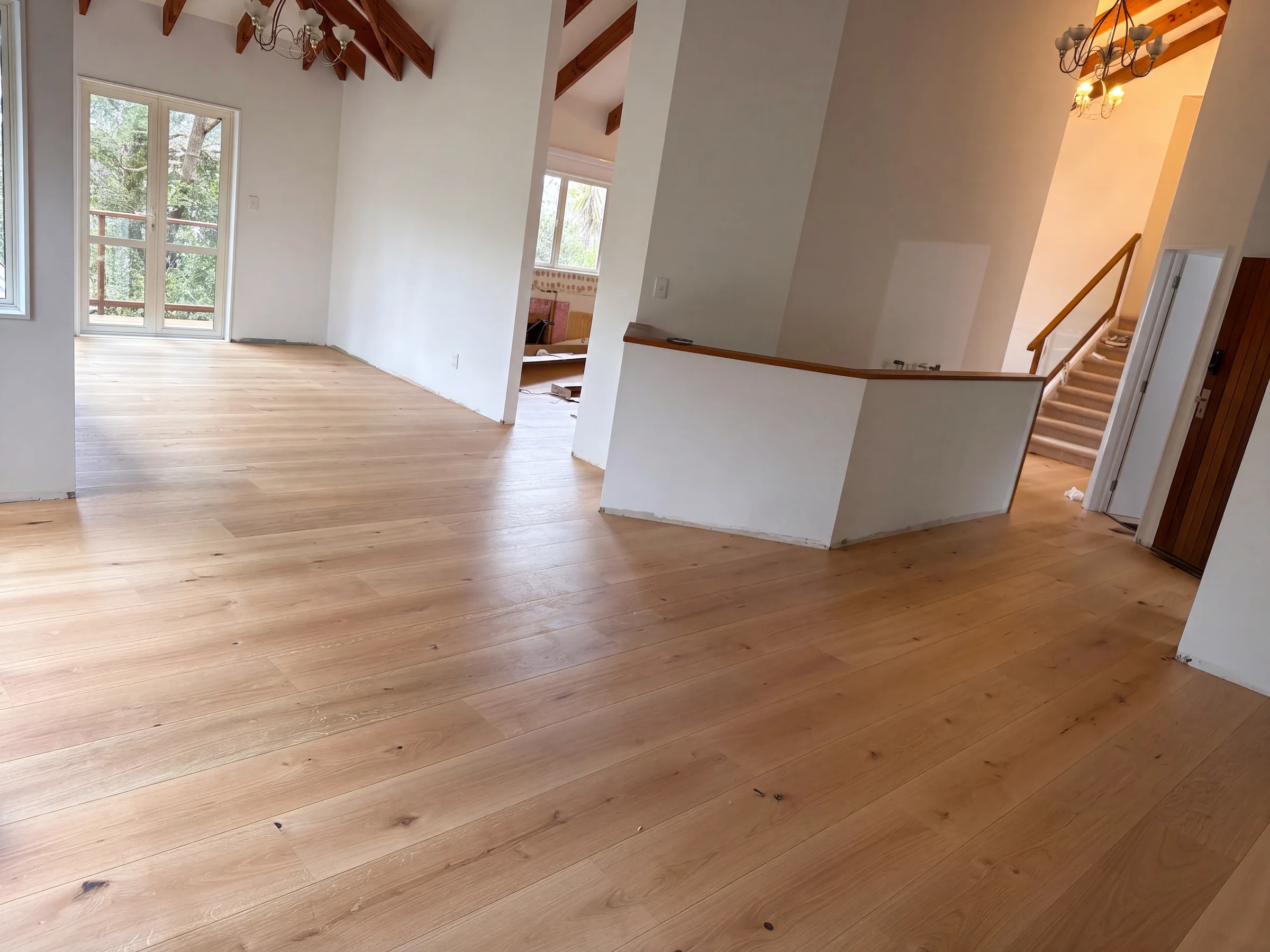
Engineered flooring is real wood where it counts. The layer you see, walk on and wear is solid oak, the same material as the face of a solid plank, and each board carries its own grain, knots and character. Nothing is printed and nothing repeats.
That is the line between engineered timber and everything that imitates it. Laminate carries a wood-grain surface over a dense HDF core, which makes it the most affordable and one of the hardest wearing floors we offer, and we say so plainly. Vinyl-based boards print the look onto plastic; we retired ours, and Why we stopped selling SPC tells that story honestly. Engineered is the one where the answer to “is it real oak underfoot” is simply yes.
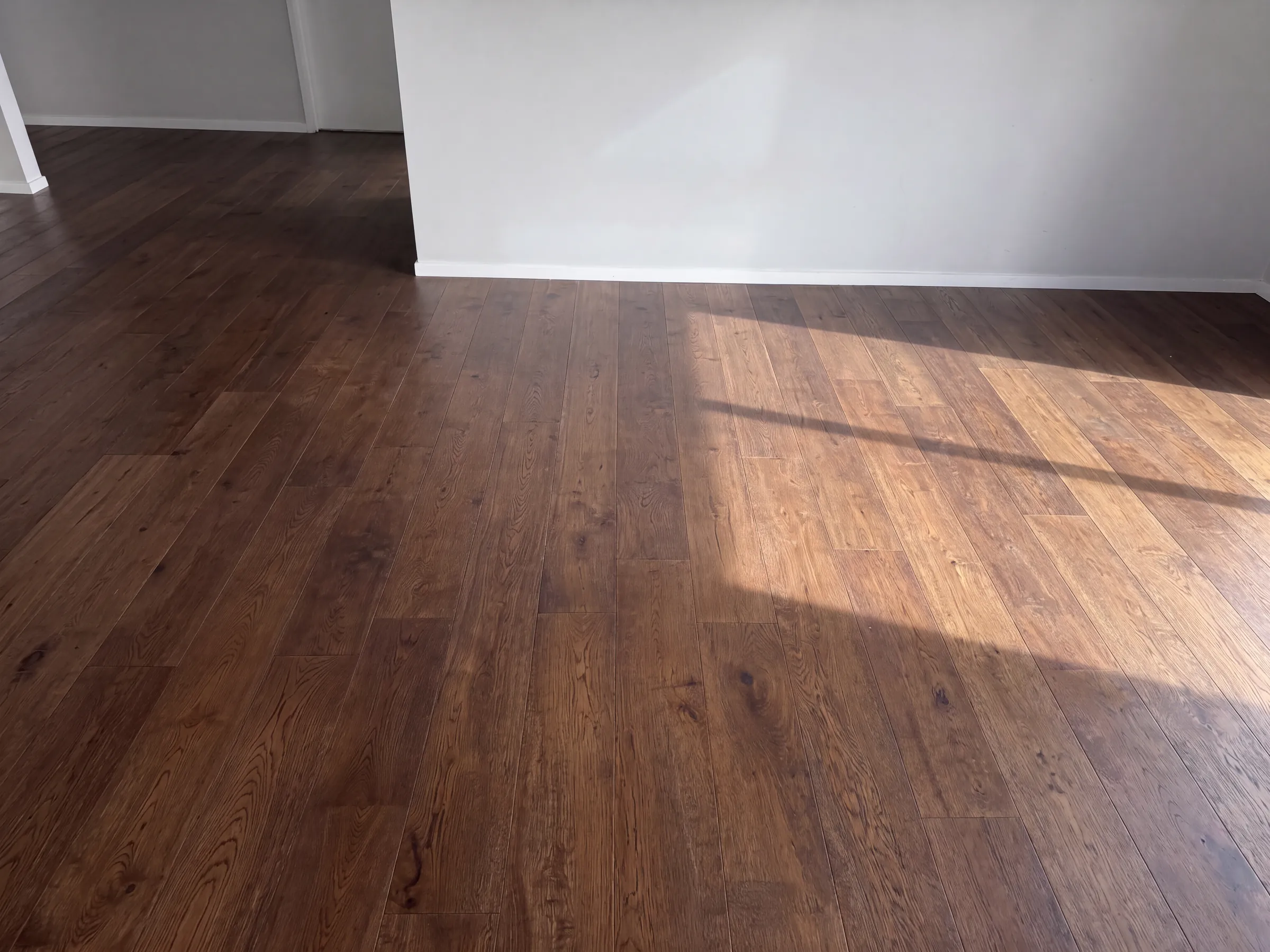
Because the surface is real oak, grade and colour do the talking. Our ATS Timber boards carry a rustic grade: knots, mineral streaks and movement in the grain, the look most people picture when they picture an oak floor. The colours run from pale Drift and Light Oak through to deep Walnut, every board arriving pre-finished, so there is no sanding, staining or waiting in your home.
Where it goes in the home.
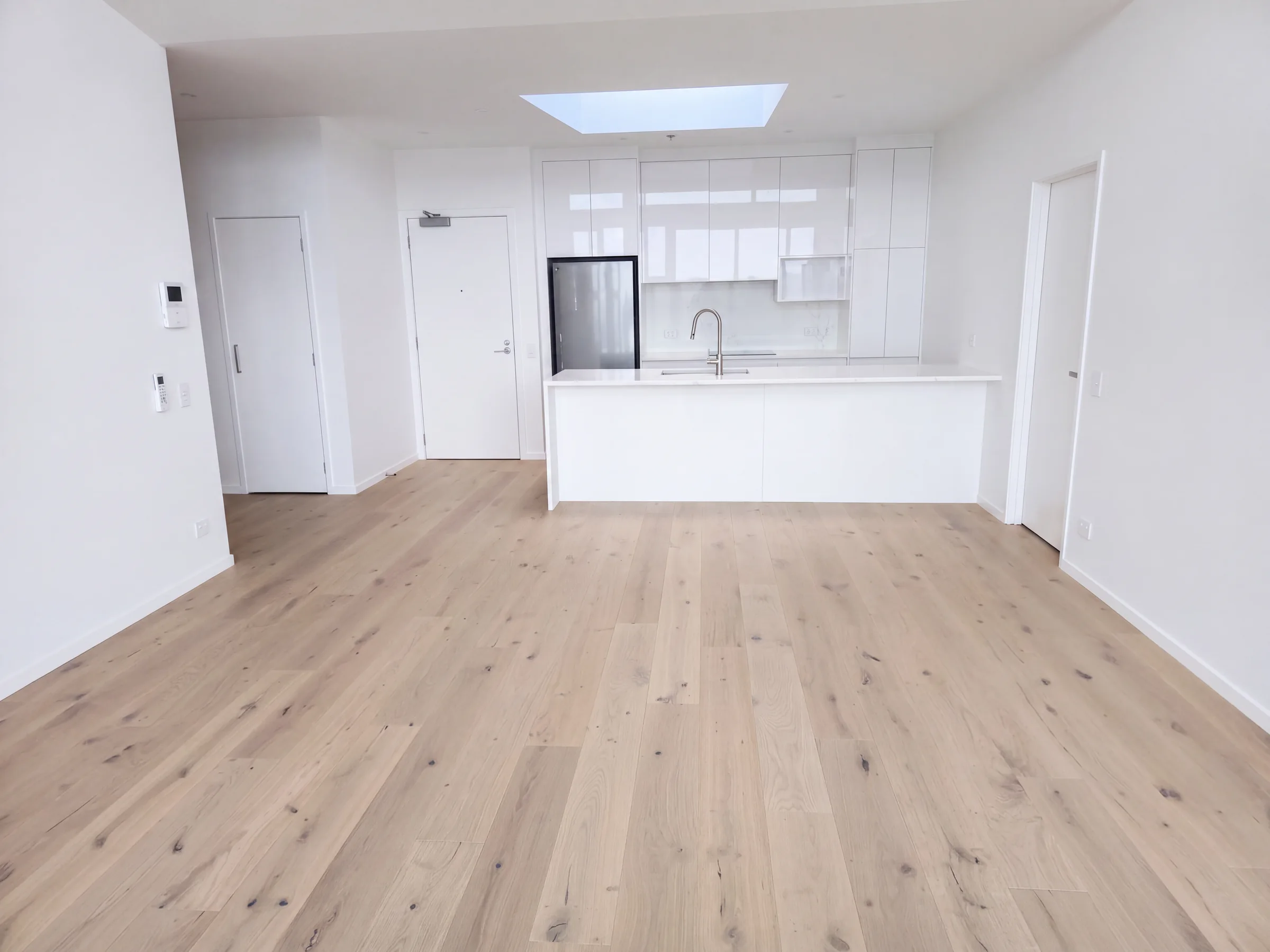
Engineered timber flooring carries the main life of a house: open plan living and dining, kitchens, hallways, bedrooms and home offices, as one continuous floor. That continuity is most of its magic. The same boards running from the front door through the kitchen and into the bedrooms make a home read larger and calmer than any room-by-room mix of coverings can.
Kitchens are fine territory: a lacquered oak floor handles the splash and traffic of a working kitchen, with the same care any timber floor asks for around standing water. For bathrooms and laundries we are honest rather than optimistic: timber can be consented into wet areas when it is detailed properly, and wet areas explains exactly how we do it under the Building Code.
How it goes down.
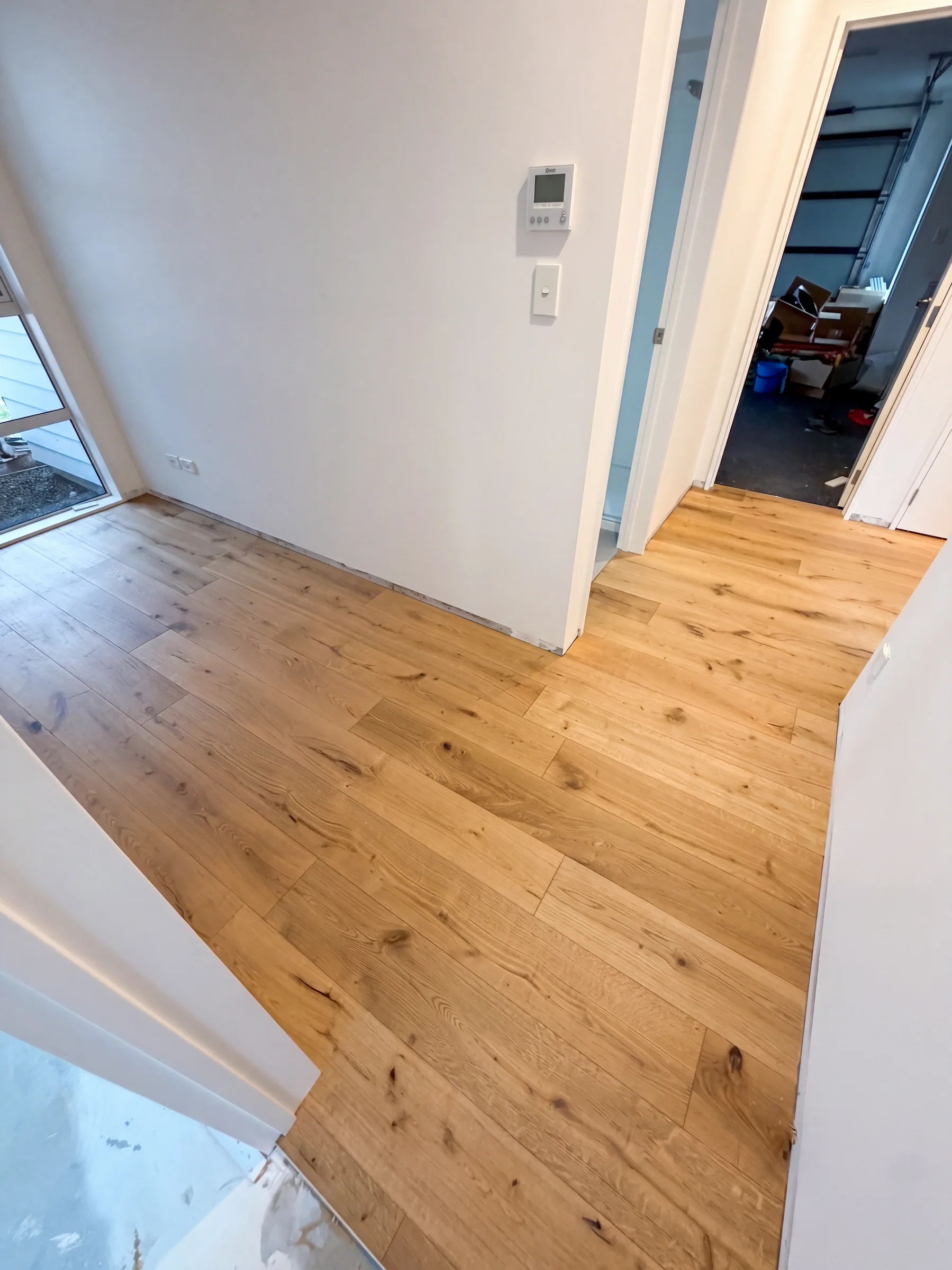
Installation starts before the boards do. The free measure is a LiDAR scan of your home, drawn into a floorplan so the timber order matches the rooms rather than a tape-measure guess, and the quote that follows is the finished number. The install itself is full glue-down: every board bonded to the slab or substrate beneath it, so nothing floats, nothing drums underfoot, and doorways resolve without clumsy transition strips.
One team supplies and installs across Auckland and beyond, stairs included, with treads and nosings finished to match the floor they meet. Our average lead time is around two weeks, published honestly with the rest of our timing on the lead times note.
The engineered ranges, side by side.
Three engineered ranges, every price covering supply and installation as one number, excluding GST, with warranties up to 25 years. ATS Timber is our own board with no middle man in the price: the cheapest 14/3 and 15/4 supply and install engineered timber in the country, and the most popular floor we lay.
Comparing quotes without the sticker shock.
Most engineered flooring in New Zealand is advertised at a supply-only rate: the boards, and nothing else. Adhesive, preparation and the installer’s labour arrive later, on a second quote, and the total lands well above the number that caught your eye. There is nothing dishonest about that model, but comparing a supply-only rate against an installed one is comparing half a floor to a whole one.
So ask one question of every number you see: does this include installation? Every rate we publish does. In Auckland we hold the lowest supply and install prices on every timber range we offer, and What a floor really costs walks through the whole quote, line by line, so you can hold any flooring company to the same standard, including us.
Let’s start from the ground up.
Tell us about your space and we’ll come back with a plan and a price.